Reflections on AI and Where Market Research is Heading |
|
|
In today's newsletter, Morning Consult SVP Bill Pink reflects on six months of category advantage research and what he's learned in the process about AI and the market research landscape. |
"Speed, quality, and cost. Pick two — no insights partner can deliver all three at once." That was the advice a senior executive gave me at my first job in market intelligence after grad school, back in the late 1990s. I turned that framework over in my head for decades, watching it grow less and less true as technology advanced, yet somehow it refused to die — a piece of industry conventional wisdom that lingered long past its expiration date. Technology enabled research solutions had already made that perspective out of date. Then came the first half of 2026. As AI-native solutions crossed a real adoption curve, that old maxim went the way of the horse and buggy: undeniably obsolete. What changed isn't that speed, quality, or cost stopped mattering — it's that AI-native tools broke the tradeoff itself. C-suite executives share their questions about paths to growth with us on Monday, and we turn around evidence based recommendations pulling from multiple data sources that directly inform their brand strategy on Friday. New offer innovations emerge constantly, and we are applying them with clients days later. I have even run sophisticated time series models of long term brand growth and short term sales response that took months in the past and turn them around in hours and sometimes minutes with full scenario planners, presentations, dashboards, … while on a flight home. The hardest part was keeping a strong wifi signal while in the air, uncovering the insights and crafting the recommendations were relatively easy to produce.
Now, you may be thinking, “here we go, another POV on the promise and potential of AI.” Fair enough, so let me share three observations on what being AI native means in 2026 and how that is different from anything I have seen in my prior 30 years in the business. |
|
|
Customer intimacy in advance |
When I worked in CRM, we talked constantly about using every customer interaction as a chance to deepen the learning relationship — to know more about wants and needs over time. The underlying assumption was simple: without a relationship nurtured over months or years, true customer intimacy wasn't possible. You couldn't optimize treatment or differentiate service without that history. The classic "big pitch" process in research worked the same way in reverse — a small army of interns and analysts would scramble to manufacture as much business knowledge as possible, trying to fake the intimacy that time alone usually built. In an AI-native world, that process flips entirely. It's now inexcusable to walk into a meeting without deep knowledge of a business or brand, because the knowledge gap that once justified the army of interns simply doesn't exist anymore. My team builds and continually refines AI-driven client planning tools that apply validated frameworks — Outcome-Driven Innovation, Jobs to Be Done — directly to our syndicated data: high-frequency signals on social and political dynamics, economic sentiment, brand reputation, alongside vetted digital sources. The output is an instant, structured view of business performance, the core strategic questions at play, and the solutions worth exploring. AI gives us the equivalent of an endless supply of interns, as Ethan Mollick first put it back in 2023. But the real value for customer intimacy isn't the AI itself — it's knowing which frameworks should guide it and what data should feed it. That's what makes Morning Consult's approach distinct: we start from over 100 million interviews, which gives AI the raw material to generate genuinely informed strategic hypotheses — the kind of intimacy it used to take years to earn. |
|
|
Meaningful content at scale |
Actionable, compelling, concise writing that informs brand growth strategy is part art, part science. I remember building recommendations for enhanced B2B targeting of enterprise software buyers, based on a series of CHAID analyses (who remembers CHAID?) applied to brand tracking data. That project took weeks — organizing the data, writing the analytic code, finalizing results into an executive-ready format — and we received plenty of kudos for the quality and speed of that one set of insights. Contrast that with our production calendar in the first half of 2026: over 150 published articles spanning categories, audiences, and individual brands. They cover the triggers and barriers behind consumer choice, mental availability and emotional closeness to brands, and how category users differ from the general population on media habits, psychographics, shopping behavior, and economic outlook — all designed to inform marketing and communications strategy. The data comes from both our always-on syndicated assets and category-specific custom research we run weekly. Let me be blunt: none of this would be possible without AI running through every stage of the process. We use it to shape custom research design, surfacing the core triggers, barriers, and shifting competitive sets in a category within minutes. We use it in technology-enabled sampling, so we get quality data at scale in hours and days rather than weeks and months. And we use it in analytics, deploying academically validated frameworks across our data assets in real time to surface hidden growth opportunities — then again in content production, trained on our voice and our data, to minimize hallucination risk and keep recommendations tied to what we're actually willing to stake a claim on. It's that last piece — creativity — that's been the biggest surprise of 2026 for me. Ask me last year whether AI could handle massive datasets or run sophisticated pattern detection in real time, and I'd have said, "of course." What I didn't appreciate was how strategic and actionable the output could be. Our AI-native tools are now surfacing white space — category entry points no competitor has claimed, audiences whose needs aren't being met or trust hasn't been earned — across categories, brands, and situations at a scale we simply couldn't reach before. For marketing and insights leaders, that's the real headline: the constraint was never AI's analytical horsepower. It was always whether the output could be trusted enough to act on. That constraint is gone when the data inputs are high quality and high frequency, when the AI is guided by the right frameworks and validated analytic tools, and when all of this is structured properly for the end user. |
|
|
And it's still all about the data |
What's clear by now is that AI doesn't just speed up the work — it changes its nature. Customer intimacy without years invested. Creativity and actionability without an army of analysts. This is a different reality for creating, curating, and acting on insights than anything I've seen in three decades. But one thing hasn't changed, and never will: it still comes down to the data. AI-native tools are only as good as what feeds them. They require data that's accurate and continuously refreshed, granular enough to support views across audiences and regions, and broad enough to capture both the macro picture — economic and cultural context — and the category-specific detail on pricing, advertising, distribution, and brand perception. They also require frameworks that guide the exploration underneath, grounded in validated findings about how people actually think, feel, and act. Strip away either of those, and the risk isn't a worse answer — it's a confidently wrong one. I've seen early drafts of our own AI-generated recommendations point toward a competitive set that hadn't existed in the data for over a year; nothing about the output looked wrong, it would have read perfectly fine to anyone using it. The model wasn't broken. The data feeding it was stale. And that may be the biggest surprise of the first half of 2026: in the middle of all this change, the old maxim about speed, quality, and cost as an unavoidable tradeoff has finally died. But the importance of building syndicated and custom data assets that meet all three of those dimensions simultaneously has never been higher. |
|
|
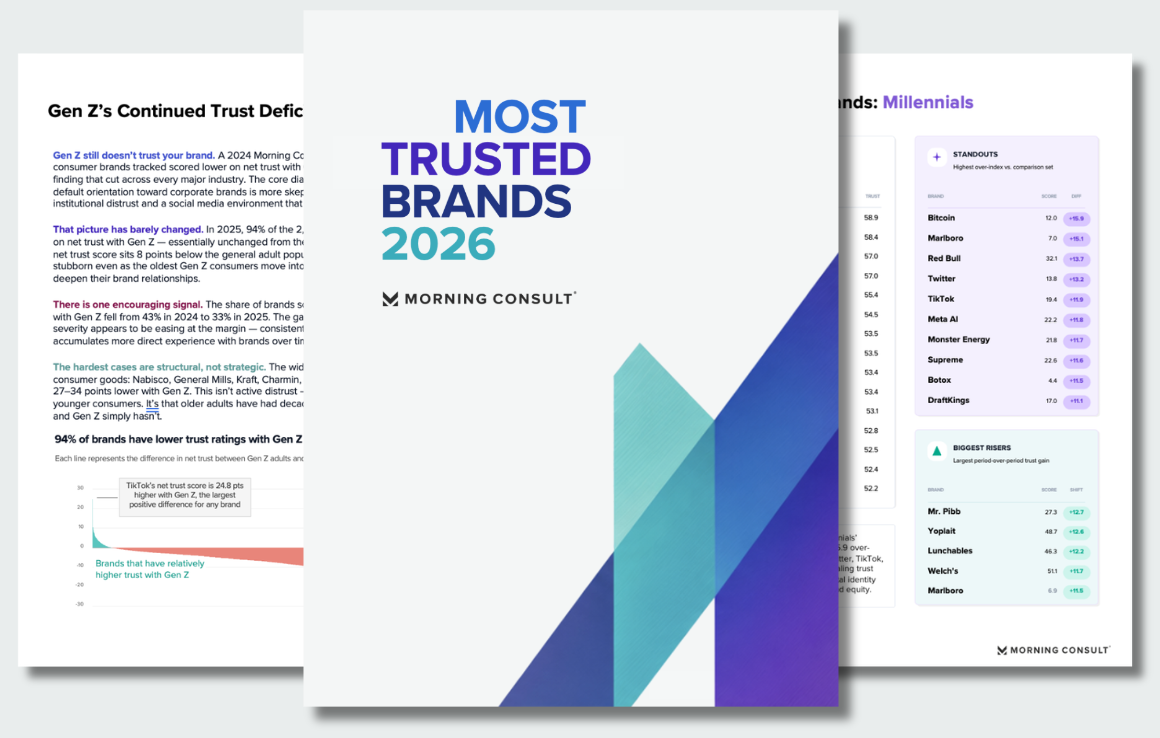
Download: Most Trusted Brands 2026 |
Our annual ranking of the brands that are winning consumer trust is live. The 2026 Most Trusted Brands report covers over 180 consumer brands across 30 different rankings. |
|
|
One Always-On Consumer Signal. Two Complementary Solutions:
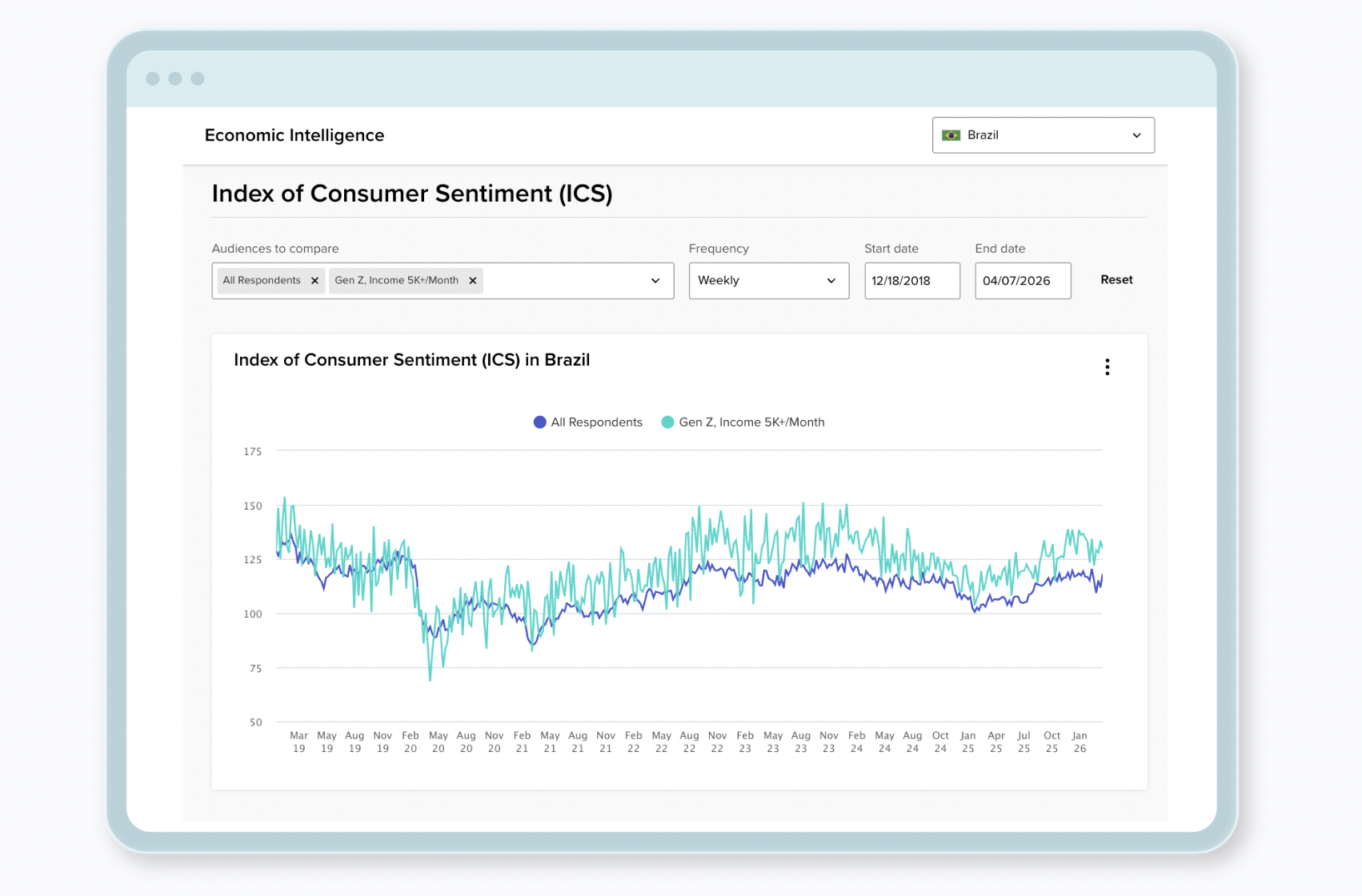
1. Intel Platform: AI-driven consumer and market research platform that transforms daily consumer surveys into clear, stakeholder-ready insight - helping leaders continuously monitor change and move from data to decision, faster.
2. Custom Research: On-demand market research built on the most advanced survey research technology to deliver solutions that are fast, scalable, cost-efficient, and built for action. |
|
|
Most research tells you what already happened. Morning Consult tells you what's coming. |
Most organizations are making decisions on research that wasn't built for the speed at which consumers and markets change today. Data is slow. Insights are fragmented. By the time analysis reaches leadership, the moment has already passed. Morning Consult changes that. From brand health and spending behavior to economic sentiment and political trends, we track the signals that move markets every day, so your team sees shifts coming before they show up in your numbers. |
|
|
|